
Flat-rate cash back versus category bonuses: a household spending comparison
A 3%/1% card beats a flat 2% card only when half your spending lands in its categories. Three households, the break-even formula, and how caps change it.
A 3% card can earn less than a 2% card. It depends on how much of your spending qualifies for 3% and what the rest earns.
The comparison becomes clearer when you give both cards the same household spending. Keep the budget fixed, apply each card's rules, and compare the annual dollars. The higher advertised rate gets one line in that calculation, not the final word.
Use two real earning structures
Citi Double Cash has no annual fee and earns 1% when you buy plus 1% as you pay. 1 For this comparison, assume all eligible purchases are paid in full so the total reaches 2%.
Capital One Savor has no annual fee and earns 3% on qualifying grocery-store, dining, entertainment, and popular streaming purchases, with 1% on other purchases. Its grocery category excludes superstores such as Walmart and Target. 2
We are comparing ordinary purchases. Exclude welcome offers, special travel-portal rates, targeted promotions, interest, and other fees from the base calculation. Those can be added separately when they actually apply.
Use the exact product name when checking terms. Similar names and older reviews can describe a different card or offer. The category structure used here is the current Savor offer cited below.
| Feature | 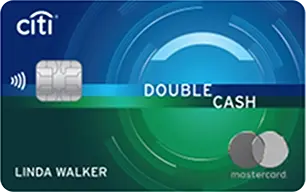 |  |
|---|---|---|
| Annual fee | $0 | $0 |
| Welcome offer | $200 cash back | $200 cash back |
| Base rate | 2% | 1% |
| Bonus categories |
|
|
| Travel insurance |
Three households, the same $24,000 annual budget
Each hypothetical household charges $2,000 a month. The difference is how much falls into Savor's qualifying 3% categories.
| Household | Eligible 3% spending per month | Other spending per month | Annual Savor rewards | Annual Double Cash rewards |
|---|---|---|---|---|
| A: most spending outside bonus categories | $600 | $1,400 | $384 | $480 |
| B: half in bonus categories | $1,000 | $1,000 | $480 | $480 |
| C: most spending in bonus categories | $1,400 | $600 | $576 | $480 |
For Household A, the annual category reward is $7,200 × 3% = $216. Other purchases earn $16,800 × 1% = $168. Total: $384, which is $96 below the flat-rate result.
Household C reverses that mix and earns $96 more with Savor. Both cards can be the better choice for a household spending exactly the same total amount.
The figures assume every purchase assigned to a bonus category qualifies and the household does not change its shopping to earn rewards. If those assumptions are wrong, update the inputs.
The break-even point is half your spending
For a card earning 3% in categories and 1% elsewhere to match 2% everywhere, half of eligible spending must receive 3%.
For each $100 split evenly, $50 at 3% earns $1.50 and $50 at 1% earns $0.50. Together, that is $2—the same as 2% of $100.
More generally:
Required bonus-category share = (flat rate − category card's base rate) ÷ (bonus rate − base rate).
Here, (2% − 1%) ÷ (3% − 1%) = 50%.
This formula assumes constant rates, no caps, equal annual fees, and no other benefits. It is useful for screening a card, but annual dollar calculations are better once caps, fees, or multiple rates enter the picture.
Categorize the merchant before the purchase
A grocery budget is not automatically a grocery-rewards budget. Start with where the charge is processed and what the issuer includes.
Suppose Household B initially counts $200 a month of superstore groceries in the 3% column, but those purchases actually earn 1% under the card's rules. Moving $2,400 a year from 3% to 1% reduces its annual rewards by $48. The apparent tie becomes $432 versus $480.
Use posted transactions to verify your biggest merchants. A household whose category estimate is wrong by several thousand dollars can choose the wrong card even if every multiplication is correct.
Check streaming and entertainment definitions too. Treat a category name as the beginning of the eligibility check, rather than assuming it includes every purchase you would put in that budget category.
A spending cap creates another calculation
Blue Cash Everyday offers a different example: 3% at U.S. supermarkets on up to $6,000 in purchases per year, then 1%. It has separate $6,000 limits for its U.S. gas-station and U.S. online-retail bonus categories. 3
Consider only supermarket spending for this illustration. At $7,200 a year of qualifying purchases, the grocery reward is:
| Portion of grocery spending | Calculation | Reward |
|---|---|---|
| First $6,000 | $6,000 × 3% | $180 |
| Remaining $1,200 | $1,200 × 1% | $12 |
| Total | $192 |
Applying 3% to all $7,200 would overstate the reward by $24. A flat 2% card would earn $144, leaving a $48 advantage for the capped grocery category in this example.
This is not a full comparison of Blue Cash Everyday with the other cards. Its additional categories and benefits need their own rows, and the rest of your spending still needs a rate. It shows why a cap belongs in the calculation before you decide.
For a card with quarterly caps, calculate each quarter separately. Unused capacity in one quarter does not necessarily cover extra spending in another. Check activation and period rules for the specific product.
Include the unusual expenses you already know about
The next twelve months may not look like the last twelve. A planned home project, medical bill, or appliance purchase can move the result toward a flat-rate card if it falls outside bonus categories.
Suppose Household C adds a budgeted $6,000 purchase that qualifies only for the base rate. Savor would earn another $60; Double Cash would earn $120 once paid. Savor's previous $96 advantage shrinks to $36.
Check payment surcharges before using a card for a large bill. A hypothetical 3% processing fee on that $6,000 charge is $180, more than either of those rewards. The right answer may be to use a payment method without the fee.
Decide whether two cards improve the result enough
Using the category card only where it earns 3% and the flat-rate card elsewhere would improve the arithmetic. Household A, for example, would earn $216 on bonus spending plus $336 on the rest, for $552 total. That is $72 more than using the flat-rate card alone.
The second card therefore adds $72 of potential annual value for that household, assuming the rules are followed. Decide whether that improvement justifies another account and payment routine. You do not have to choose maximum complexity to make a good decision.
Compare the current CardRewards cash-back options, then inspect Citi Double Cash and Capital One Savor against your own merchant totals. A twelve-month dollar estimate will tell you far more than the largest percentage printed on the card's page.
Sources checked September 27, 2026 (America/New_York). Household budgets and future purchases are hypothetical. Calculations assume eligible purchases paid in full and exclude welcome offers, special portal rates, interest, and other fees unless expressly illustrated.
Sources
Cards in this article
Citi Double Cash Card
Citi · Mastercard Standard
- Fee
- $0
- Bonus
- $200 cash back
- Base
- 2X
5X Hotels · 5X Car Rentals · 5X Attractions
Capital One Savor Cash Rewards Credit Card
Capital One · Mastercard World Elite
- Fee
- $0
- Bonus
- $200 cash back
- Base
- 1X
3X Dining · 3X Entertainment · 3X Grocery Stores · 3X Streaming
Blue Cash Everyday Card from American Express
American Express · Amex Standard
- Fee
- $0
- Bonus
- $200 cash back
- Base
- 1X
3X Gas Stations · 3X Grocery Stores · 3X Online Shopping · 2X Department Stores
Keep reading
Cash Back
How to choose a cash back card from your actual spending
A 3% card can earn less than a 2% card. Compare annual cash back on your real spending, apply caps and merchant rules, then subtract fees.
6 min read
Cash Back
Grocery card rewards: supermarkets, superstores, and warehouse exclusions
Grocery bonuses follow the merchant, not the food. How supermarket, superstore, warehouse, and online grocery rules change what your card actually earns.
6 min read
Card Strategy
How to build a simple rewards wallet you will actually maintain
A rewards wallet you can explain in two sentences: one default card, at most one clear exception, dependable autopay, and a review after ninety days.
5 min read