
Grocery card rewards: supermarkets, superstores, and warehouse exclusions
Grocery bonuses follow the merchant, not the food. How supermarket, superstore, warehouse, and online grocery rules change what your card actually earns.
You buy milk, eggs, and vegetables at three stores. Your card gives you a grocery bonus at one, its ordinary rate at another, and cannot be used at the third.
Nothing about the food changed. The merchant and payment rules did.
For grocery rewards, the useful question is where and how you pay, not simply whether you are buying groceries. Separate your supermarket, superstore, warehouse, and delivery spending before choosing a card.
The card sees a merchant category, not your shopping list
American Express explains that it uses merchant codes, generally based on what a merchant primarily sells, to determine eligibility for additional rewards. 1 A store's label in your budgeting app is not necessarily the category used by your card's rewards program.
That creates a practical distinction. A weekly food shop at a large general retailer may not qualify for a supermarket bonus, while ordinary household supplies bought from an eligible supermarket may be part of a qualifying purchase. Product-specific exclusions still matter; a merchant category is not permission to assume every transaction qualifies.
Amex's supermarket definition excludes superstores, warehouse clubs, convenience stores, and meal-kit delivery services. Its examples of excluded superstores include Target and Walmart. 2
Treat those as rules for the relevant Amex category. Another issuer or card can define its categories differently. Even within one issuer, “online grocery” may have different conditions from “supermarkets.”
Divide your grocery budget by checkout
A food budget is useful for managing your household. A card comparison needs a little more detail.
| Where you shop | What to check before assigning a bonus rate |
|---|---|
| A conventional supermarket | Does it qualify under this card's merchant definition? |
| A superstore selling food, clothing, and electronics | Is the store explicitly excluded from the grocery category? |
| A warehouse club | Does the card reward warehouse purchases, and is its payment network accepted? |
| The supermarket's own website or pickup service | Does online ordering change eligibility or the way the charge is processed? |
| A delivery marketplace | Who submits the charge, and which category does this card recognize? |
| A meal-kit subscription | Is it included in the specific category you are relying on? |
Take the last few statements and sort your usual merchants into these groups. A household spending $900 a month on food might have only $400 of monthly purchases eligible for a particular supermarket bonus.
That is still meaningful spending. It just calls for a different calculation than $900 multiplied by the advertised rate.
Costco adds a payment-network question
At U.S. Costco warehouses, Visa is the generally accepted credit-card network. Costco.com also lists Mastercard. Costco accepts other payment methods too; the warehouse and online lists are not identical. 3
This matters before you calculate rewards. A card that looks ideal for ordinary purchases is not a useful warehouse checkout choice if Costco does not accept that card there. Paying through a phone does not make the underlying card's network irrelevant.
The Costco Anywhere Visa by Citi earns 2% on other Costco and Costco.com purchases. It has no annual card fee with a paid Costco membership, and its rewards are issued through an annual certificate after the February statement closes. 4 Those are different economics and redemption timing from a card that lets you cash out rewards throughout the year.
You do not have to use Costco's co-branded card just because you shop there. Compare another accepted card's return, benefits, and redemption rules against it. Also keep the cost of membership visible if you are joining chiefly to use a particular card or shopping strategy.
The CardRewards Costco page is a starting point for comparing relevant card benefits. Keep warehouse acceptance and online eligibility separate as you review them.
A mixed grocery budget needs mixed rates
Consider this hypothetical household's annual spending:
| Shopping channel | Annual purchases |
|---|---|
| Eligible U.S. supermarkets | $4,800 |
| U.S. Costco warehouses | $3,600 |
| Superstores | $2,400 |
| Total | $10,800 |
American Express Blue Cash Preferred earns 6% on the first $6,000 of eligible U.S. supermarket purchases per calendar year, then 1%. Its ongoing annual fee is $95; the public offer checked for this article waives that fee in the first year. 5
For an ongoing year, suppose the household uses Preferred only for the $4,800 of qualifying supermarket purchases and a hypothetical no-fee Visa earning 2% for the other $6,000. All purchases qualify for the stated rates, and no interest is incurred.
- Supermarkets: $4,800 × 6% = $288.
- Warehouse and superstore purchases: $6,000 × 2% = $120.
- Total rewards after Preferred's $95 fee: $313.
The same $10,800 entirely on the hypothetical 2% Visa would earn $216. The two-card setup improves the result by $97 a year, before any other benefits or differences.
Applying 6% to the entire food budget would predict $648 in rewards before the fee. That would ignore both merchant exclusions and the supermarket cap. A category name in a household spreadsheet cannot override either rule.
Track the cap as the year progresses
A card can be the right choice in March and a weaker choice in November if you have reached its bonus limit.
Using the Preferred rates above, $7,200 of qualifying supermarket spending earns $360 on the first $6,000 and $12 on the remaining $1,200: $372 before the fee. The grocery return is about 5.17% before that fee, not 6% on the full amount.
If a second card earns 2% on the final $1,200 instead, that portion earns $24. Moving those purchases adds $12. It is a real improvement, but also a useful measure of how much attention the switch deserves.
Use the issuer's stated cap period. A calendar-year cap does not necessarily restart when your annual fee posts. Check how purchases from additional cardholders contribute to the account's limit before assuming each physical card has a separate allowance.
Online grocery can mean something different
Chase's online-grocery definition includes qualifying online pickup and delivery transactions, excludes Target, Walmart, and wholesale clubs, and includes meal-kit delivery services. 6 That last detail differs from the Amex supermarket definition discussed earlier.
Ordering online therefore is not a universal way to turn an excluded merchant into an eligible one. Start with the card's exact definition, then confirm the merchant and ordering channel.
It is also possible to earn more rewards and spend more money. Include delivery charges, service fees, tips, and any price differences when comparing an online order with the way you normally shop. A small reward increase may not cover them.
Do not change stores just to chase the rate
Suppose the same basket costs $100 at a store where your card earns 2%, or $105 at a store where it earns 6%. Ignore tax and fees for this illustration.
The first basket costs $98 after rewards. The second costs $98.70. The higher reward rate leaves you 70 cents worse off.
There may be other reasons to prefer the second store: quality, selection, distance, or convenience. Those are legitimate reasons. The rewards, by themselves, do not make it cheaper.
This comparison is particularly useful for warehouse shopping, where larger package sizes can change what you consume or discard. Calculate the cost of what you will actually use, not just the rebate on the receipt.
Verify one ordinary transaction
Before moving a large share of spending, check a purchase you were going to make anyway. Keep the receipt, note the checkout channel, and wait until the charge and its rewards appear in your account.
For example, an eligible $86.40 purchase at 6% should produce roughly $5.18 of rewards, subject to the issuer's calculation and rounding. If you see about $0.86 instead, investigate the merchant category, remaining cap, and exclusions. Those amounts are an illustration, not a reported test transaction.
If the result seems wrong, ask the issuer which category it received and which rule applied. A receipt can help explain the purchase, but it does not guarantee that a merchant's rewards classification will change.
Once you know how your usual stores behave, the choice gets easier. Put the strongest accepted card against each checkout you actually use, and leave the rest of the food budget out of that card's bonus calculation.
Sources checked September 27, 2026 (America/New_York). Spending, basket prices, and receipt amounts are hypothetical. U.S. merchant and payment rules are discussed; other countries can differ.
Sources
Cards in this article
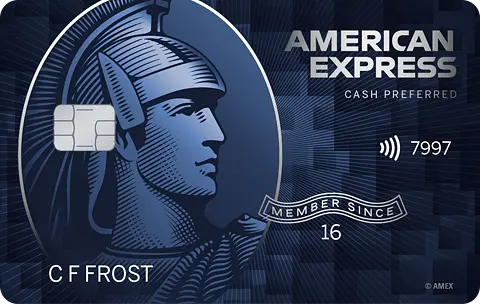
Blue Cash Preferred Card from American Express
American Express · Amex Standard
- Fee
- $95
- Bonus
- $250 cash back
- Base
- 1X
6X Streaming · 6X Grocery Stores · 3X Transit · 3X Gas Stations
Keep reading
Cash Back
Flat-rate cash back versus category bonuses: a household spending comparison
A 3%/1% card beats a flat 2% card only when half your spending lands in its categories. Three households, the break-even formula, and how caps change it.
5 min read
Cash Back
How to choose a cash back card from your actual spending
A 3% card can earn less than a 2% card. Compare annual cash back on your real spending, apply caps and merchant rules, then subtract fees.
6 min read
Card Strategy
Monthly versus annual card credits: build a calendar that follows the terms
Monthly, half-year, quarterly, anniversary-year, and four-year credits each reset on their own clock. Build a benefit calendar that follows the actual terms.
6 min read