
How to build a simple rewards wallet you will actually maintain
A rewards wallet you can explain in two sentences: one default card, at most one clear exception, dependable autopay, and a review after ninety days.
You should be able to explain your everyday card setup in one or two sentences. If buying groceries requires checking a spreadsheet, a promotion calendar, and which payment app is installed, the setup may be demanding more attention than you want to give it.
A simple wallet starts with a reliable default. Add another rule only when its value is large enough—and its use obvious enough—to survive an ordinary busy week.
Decide how much administration you want
Before choosing cards, choose the work you are willing to do.
Do you want one statement to review? Will you remember one category exception? Are you happy to check a travel redemption before booking, or would you rather take cash back? Would anyone else using the household cards follow the same rules?
These preferences affect actual results. A setup that produces an extra $80 on paper but leads to repeated missed credits or wrong-card purchases may not produce $80 in practice.
Write a short operating rule. For example: “Use the default card everywhere. Use the second card only at these three grocery stores. Review both accounts every Sunday.” If the rule needs frequent revisions, decide whether you enjoy that work enough to keep it.
Make one card the default
Evaluate the card you already own before opening another. Check its fee, ordinary purchase rate, redemption options, and whether the merchants you use accept it.
Citi Double Cash illustrates a straightforward earning structure: 1% when you buy and another 1% as you pay, with no annual fee. Rewards are earned as ThankYou points that can be redeemed for cash back. 1 The payment-related portion is part of the advertised 2%, not an extra bonus on top.
At 2%, $24,000 in eligible purchases would produce $480 once the relevant payment requirements are met. That is the baseline for the examples here, assuming no interest or other fees.
The best default for you might be different. What matters is having a known result against which to judge every added complication.
Do not include spending that you cannot pay by card without a fee in that estimate. If a bill costs extra to charge, compare the surcharge with the reward before moving it.
Give a second card one clear job
Suppose a no-fee category card would earn 3% on $3,600 of purchases that currently earn 2%. Its additional annual reward is $36:
$3,600 × (3% − 2%) = $36.
The full $108 earned at 3% is not the improvement. Your default would already have earned $72 on those purchases.
Now decide what $36 is worth to you. If using the second card is automatic and adds almost no work, it may be welcome. If it creates twenty minutes of extra administration each month, that is four hours a year, or $9 in additional rewards per hour of that time. This is a personal tradeoff, not a claim that everyone's time has the same price.
At $600 a month of eligible spending, the same 1-percentage-point improvement produces $72 a year. A $95 annual fee would exceed that improvement by $23 unless other benefits justify it.
The second card needs a distinct role. “Use it when I remember” is difficult to evaluate and easy to overestimate.
Write down the few things someone else would need to know
A household card note can fit on one page:
| Item | Example of what to record |
|---|---|
| Default purchase card | Card nickname and last four digits |
| One category exception | Specific merchants or purchases where the second card belongs |
| Payment setup | Linked bank account, due date, and selected autopay amount |
| Annual commitments | Annual-fee month and any benefit you intentionally use |
| Review routine | When you check statements and redeem rewards |
Keep full card numbers, passwords, and security codes out of an ordinary shared note. Use the account's authorized access arrangements where another person needs to manage it.
Apply the same rules to physical cards, digital wallets, and stored online payments. Updating the card in your wallet does not update the card a subscription merchant has on file.
Automate the payment, then check that it works
For a household that can fund its bills in full, statement-balance autopay can reduce the chance of forgetting a payment. Confirm the setting, linked account, start date, and next withdrawal amount. Keep enough bank funds available for the payment and other scheduled bills.
Paying in full on time can avoid purchase interest when an applicable grace period is in effect. Carrying a balance can change that treatment. 2 If the bill is not affordable, simplify around repayment first; adding reward categories will not fix the cash shortfall.
Use a statement-ready notification and a payment reminder or confirmation where available. Capital One, for example, offers account alerts for statements, upcoming due dates, and proximity to a credit limit. 3 Available controls vary by issuer.
Automation handles a repeated instruction. Your review catches a changed bill, an unexpected subscription, a failed payment, or a bank account that no longer has enough money.
Make rewards easy to use
Choose a redemption routine you will actually follow. For cash back, that might be a quarterly check and a deposit to a savings account, where the card permits it. For travel points, identify a likely trip and inspect redemption options before the next annual fee.
Keep the redemption separate from the payment task. A rewards balance does not guarantee that your bill has been paid, and a statement credit can have different treatment from a payment.
If you want a place to start tracking the whole household, the CFPB's free toolkit includes a spending tracker, bill calendar, and cash-flow budget. 4 You do not need a special rewards app to see when money comes in and bills go out.
Review after ninety days, using what happened
Compare expected rewards with the rewards actually earned. Check whether the second card reached its intended merchants and whether a benefit caused extra spending.
Also count the tasks you disliked. Did the extra statement lead to confusion? Did a monthly credit feel like an errand? Did another household member repeatedly choose the default because the exception was unclear?
You can simplify without immediately closing accounts. First remove unnecessary cards from everyday purchase decisions and move recurring charges deliberately. Before closing or changing a card, ask the issuer about remaining rewards, pending refunds, benefits, fees, and the implications of the proposed change. Avoid a rushed cleanup just to make the wallet look tidy.
Use the CardRewards card directory to compare the role you still need, rather than browsing for another attractive bonus. A good simple wallet makes ordinary purchases easy, payments dependable, and rewards available for something you want. Once it does that, it is allowed to stay boring for a while.
Sources checked September 27, 2026 (America/New_York). Spending, category-card terms, time estimates, and incremental rewards examples are hypothetical. Citi's named earning and redemption structure is sourced below.
Sources
Cards in this article
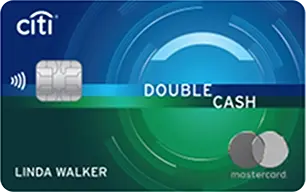
Citi Double Cash Card
Citi · Mastercard Standard
- Fee
- $0
- Bonus
- $200 cash back
- Base
- 2X
5X Hotels · 5X Car Rentals · 5X Attractions
Keep reading
Card Strategy
Monthly versus annual card credits: build a calendar that follows the terms
Monthly, half-year, quarterly, anniversary-year, and four-year credits each reset on their own clock. Build a benefit calendar that follows the actual terms.
6 min read
Card Strategy
DoorDash credits versus ordering directly: calculate what you actually save
A DoorDash discount lowers the delivery price, not necessarily what you spend. Compare the same basket ordered direct, with fees, tips, and DashPass included.
5 min read
Card Strategy
Chase Sapphire Preferred renewal value without the welcome bonus
Is Sapphire Preferred worth $95 again without the welcome bonus? A renewal worksheet: the hotel credit on a real booking, transfers you will use, and the alternative.
5 min read